
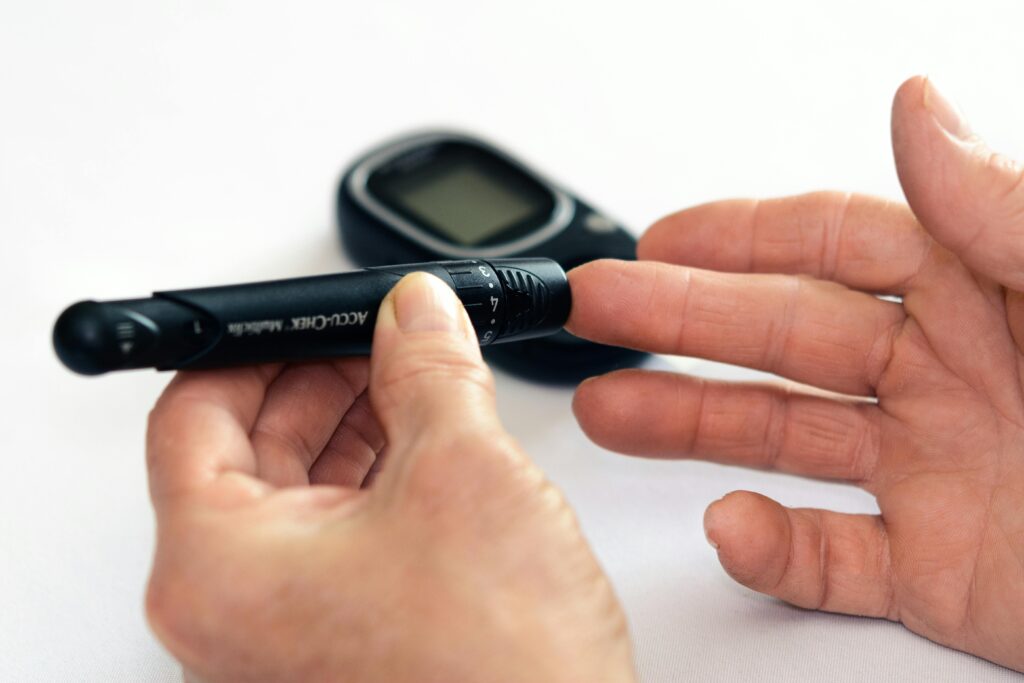
Spectrum of Blood Sugar Imbalance
Modern medicine generally oversimplifies screening for blood sugar imbalance into two categories: Diabetic and Non-Diabetic. In fact, there exists a spectrum of irregularities in blood sugar balance, which results in a multitude of symptoms, including fatigue, brain fog, shakiness, mood changes, sweating, anxiety, palpitations, disturbed sleep, weight gain, and increased inflammation.
GIGTT: Blood Sugar Testing the Right Way
Elevated blood sugar is routinely tested using a Hemoglobin A1c (HgA1c) marker. HgA1c is a three-month average of your blood sugar, showing the quantity of sugar that attaches to your red blood cells. HgA1c is simply a mean of the actual blood sugar, and while this is a decent preliminary screening test for diabetes, it fails to capture subtle fluctuations in blood sugar and neglects your body's responses to these changes. As it turns out, many people with blood sugar imbalances will have a normal HgA1c. The best method to assess fluctuations in blood sugar is fasting insulin and glucagon, the two pancreatic hormones involved in blood sugar regulation. In addition to fasting blood sugar and HgA1c, these markers are combined into one complete 3-hour metabolic stress test called the GIGT Test (Glucose/Insulin/Glucagon Tolerance Test: GIGTT). Testing in this fashion shows subtle fluctuations in hormones and blood markers, which better facilitate diagnosing and treating blood sugar-related symptoms.

Am I Insulin Resistant?
Many are familiar with the sugar-lowering effects of Insulin, and its association with Type I and Type II Diabetes. However, most need to become more familiar with the epidemic of overproduction and under-utilization of insulin as a response to dietary sugar intake, aka Insulin Resistance/Metabolic Syndrome. When we take in carbohydrates ie sugar, beta cells in the pancreas release insulin to move sugar out of the bloodstream and into the cells to make energy. In cases of insulin resistance, insulin binds to receptors on the cell surface but does not "open the door," preventing sugar from entering the cells. This inactivity causes elevated blood sugar and insulin in the bloodstream, resulting in inflammation and low cellular energy production.
Often, this tidal wave builds until the proverbial dam breaks and sugar floods into the cells, leaving us reactively hypoglycemic (low blood sugar). At this point, glucagon, the sister hormone to insulin, starts to rise, thereby elevating blood sugar via the liver. However, glucagon can become overly exuberant, resulting once again in "elevated" blood sugar. To summarize, when blood sugar drops due to the "dam breaking", glucagon rises in a compensatory mechanism to maintain balance, but with insulin resistance we find ourselves back at square one with newly elevated blood sugar and insulin resistance, and round and round we go.....insulin resistance leads to Metabolic Syndrome.
Energy Ups and Downs
Get Off the Merry-Go-Round!
So, what does this Merry-Go-Round feel like? The most common complaint is erratic energy - you feel great one minute, then exhausted the next. Meanwhile, the brain is screaming for sugar even though sugar is the worst thing we can give the body when insulin resistance is present. If we choose a sugary snack, or often even if we don't, there is a momentary energy bolstering, followed by another lull. Many also experience fatigue after eating. While gut issues can contribute to this symptom, it is often due to caloric misallocation. Rather than being burned for cellular energy, your calories are being stored as fat. This leads to elevated blood sugar, belly fat, fatigue, brain fog and increased risk for nearly all pro-inflammatory degenerative diseases. As you can imagine, these issues result in further negative downstream effects and disease.

At Regenerative Medicine of Carmel, we test for the most common blood sugar disorders as well as more elusive conditions, which are grossly underdiagnosed and under-treated in the United States. Metabolic Syndrome, Syndrome X, and Insulin Resistance are glycemic disorders we commonly test for. If our preliminary screening markers are not within our optimized ranges, we can also order a more comprehensive 3-hour Glucose-Insulin-Glucagon Tolerance Test. This test will further elucidate the exact mechanism of your sugar imbalance, making our treatments more focused and effective.